
If you’ve ever caught a glimpse of yourself in the mirror and thought, “Wow, that doesn’t look like me,” you may have briefly experienced how your mind's eye helps feed your feelings of vitality, beauty and wellness. Rapid or unexpected changes or challenges to our perceptions can shake our core sense of self.
In February of 2025, Becky Sternhagen, a mother of three and a 20+ year team member in the inpatient physical therapy unit at Carle Foundation Hospital, found herself facing a potentially profound identity shift. Diagnosed with breast cancer, she knew that if her treatment involved chemotherapy, it likely also meant hair loss.
What she didn’t know was that fate had a different plan for her. “It was really neat that it just happened to be,” Sternhagen said.
What happened…began with a conversation. Shortly after her cancer diagnosis, Sternhagen was on the phone with a close friend who is a hairstylist living out of state. Her friend called to share what she had heard from some of her clients who tried cold capping while undergoing chemotherapy. It was very positive but also estimated to cost several thousand dollars.
“Yes, it sounded great, but at that time I wasn’t sure how much I’d be working, and I have three kids, so I didn’t know if I could swing that kind of money,” Sternhagen remembers. “So, I kind of just resigned myself to the fact that if I needed chemotherapy, I was going to lose my hair.” Hair loss is one of the most mentally and emotionally challenging side effects of cancer treatments, often serving as a visible sign of the disease to the patient, family and friends.
Enter the Stephens Family Clinical Research Institute, Carle Cancer Institute Urbana, and Maria Perdekamp, MD, oncologist.
“A few days after the conversation with my friend, I met with Dr. Perdekamp, to talk about my diagnosis and the treatment plan,” Sternhagen said. “She talked about chemotherapy, side effects and hair loss, but then said they had a research study going on and she thought I would be a good candidate. My participation would be free of charge.
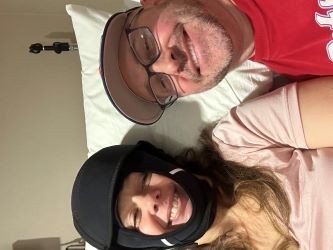 “It was such a blessing, I couldn’t believe it. They even paid ME $50 every time I came in to do chemotherapy infusions with the cold cap on!”
“Cold capping can significantly reduce or even prevent hair loss during taxane-based chemotherapy," Dr. Perdekamp explained. "The emotional impact of losing your hair while fighting a serious illness is often underestimated. Cold capping offers a way for patients to feel like themselves again, providing essential confidence and a sense of control during their recovery."
Sternhagen, who lives in Mahomet, also appreciates the convenience. Without sacrificing quality, she receives care close to home by a highly skilled clinical team of cancer experts and researchers who investigate innovative therapies. Not needing to factor in hours of travel for her appointments and treatments is a blessing for the busy mother of two high school children and one in the sixth grade and it has made it easier for her to continue to work while undergoing treatment. “I can get everything I need right here in Champaign. I don’t have to drive to Indianapolis or Chicago. That means a lot,” Sternhagen shares.
As for the cooling cap.
“It was cold and a little uncomfortable, but not horrible,” confides Sternhagen. She says the researchers shared tips and tricks with her, learned from others who participated in the research study. For example, to avoid getting an ice cream-induced type headache from the intense cold, padding the portion of the cap that came down over the forehead with an extra strip or two of moleskin helps. “Once the initial coldness kicks in, and you get numb to it, then the biggest thing is getting used to the strap that goes under your chin to keep the cap compressed against your scalp. It’s tight. But they make sure you can open your mouth wide enough to eat or drink.”
“Cold capping is generally tolerated well by patients,” Lindsay Nickell, BS, LPN, Clinical Research Coordinator, Stephens Family Clinical Research Institute, Carle Cancer Institute Urbana, said. “Once the cold cap gets down to the desired temperature, their bodies seem to adjust. We also keep patients bundled up with blankets from the blanket warmer, so they stay as warm and comfortable as possible.
Asked if she’d recommend cold cap therapy to others, Sternhagen answers with a resounding, “yes,” adding, “I didn’t always feel the best, but just being able to look like myself made a huge difference.” From her radiation oncologist, who initially thought she was wearing a wig because she still had so much hair, to her co-workers, who confided they could not even tell she was going through cancer treatment, the moral boost Sternhagen got from keeping her hair preserved her confidence and sense of self, which was significant to her well-being and outlook.
“I do feel like being able to keep my hair made my children feel…I don’t know...maybe just being able to look more like myself was a little less scary for them. Yes, I have cancer, but it’s still me.”
Nickell agrees, “Being able to keep your hair and not having the obvious sign of going through chemotherapy allows patients to live a more normal daily life and helps younger children and family cope with the illness while their loved one is undergoing treatment.”
Sternhagen was able to say goodbye to the cold cap in June, when she finished the chemotherapy infusions it had protected her hair from, and looks forward to completing her other infusions in March.
The Stephens Family Clinical Research Institute is a part of Carle Health, providing the resources to build an intellectual and innovation infrastructure that expands Carle Health’s engagement in research. It partners with clinicians and scientists to improve medical practices and health outcomes. In 2024, it led 400+ active studies; enrolled 4,900+ participants; and contributed 200+ publications.
Originally, 20 spots were allotted for patients to participate in the cool cap study, but as patient interest exceeded that number, additional study slots were allotted. It is not known at this time when the study will close and the results will be made available. Look for more to come.
In February of 2025, Becky Sternhagen, a mother of three and a 20+ year team member in the inpatient physical therapy unit at Carle Foundation Hospital, found herself facing a potentially profound identity shift. Diagnosed with breast cancer, she knew that if her treatment involved chemotherapy, it likely also meant hair loss.
What she didn’t know was that fate had a different plan for her. “It was really neat that it just happened to be,” Sternhagen said.
What happened…began with a conversation. Shortly after her cancer diagnosis, Sternhagen was on the phone with a close friend who is a hairstylist living out of state. Her friend called to share what she had heard from some of her clients who tried cold capping while undergoing chemotherapy. It was very positive but also estimated to cost several thousand dollars.
“Yes, it sounded great, but at that time I wasn’t sure how much I’d be working, and I have three kids, so I didn’t know if I could swing that kind of money,” Sternhagen remembers. “So, I kind of just resigned myself to the fact that if I needed chemotherapy, I was going to lose my hair.” Hair loss is one of the most mentally and emotionally challenging side effects of cancer treatments, often serving as a visible sign of the disease to the patient, family and friends.
Enter the Stephens Family Clinical Research Institute, Carle Cancer Institute Urbana, and Maria Perdekamp, MD, oncologist.
“A few days after the conversation with my friend, I met with Dr. Perdekamp, to talk about my diagnosis and the treatment plan,” Sternhagen said. “She talked about chemotherapy, side effects and hair loss, but then said they had a research study going on and she thought I would be a good candidate. My participation would be free of charge.
“It was such a blessing, I couldn’t believe it. They even paid ME $50 every time I came in to do chemotherapy infusions with the cold cap on!”“Cold capping can significantly reduce or even prevent hair loss during taxane-based chemotherapy," Dr. Perdekamp explained. "The emotional impact of losing your hair while fighting a serious illness is often underestimated. Cold capping offers a way for patients to feel like themselves again, providing essential confidence and a sense of control during their recovery."
Sternhagen, who lives in Mahomet, also appreciates the convenience. Without sacrificing quality, she receives care close to home by a highly skilled clinical team of cancer experts and researchers who investigate innovative therapies. Not needing to factor in hours of travel for her appointments and treatments is a blessing for the busy mother of two high school children and one in the sixth grade and it has made it easier for her to continue to work while undergoing treatment. “I can get everything I need right here in Champaign. I don’t have to drive to Indianapolis or Chicago. That means a lot,” Sternhagen shares.
As for the cooling cap.
“It was cold and a little uncomfortable, but not horrible,” confides Sternhagen. She says the researchers shared tips and tricks with her, learned from others who participated in the research study. For example, to avoid getting an ice cream-induced type headache from the intense cold, padding the portion of the cap that came down over the forehead with an extra strip or two of moleskin helps. “Once the initial coldness kicks in, and you get numb to it, then the biggest thing is getting used to the strap that goes under your chin to keep the cap compressed against your scalp. It’s tight. But they make sure you can open your mouth wide enough to eat or drink.”
“Cold capping is generally tolerated well by patients,” Lindsay Nickell, BS, LPN, Clinical Research Coordinator, Stephens Family Clinical Research Institute, Carle Cancer Institute Urbana, said. “Once the cold cap gets down to the desired temperature, their bodies seem to adjust. We also keep patients bundled up with blankets from the blanket warmer, so they stay as warm and comfortable as possible.
Asked if she’d recommend cold cap therapy to others, Sternhagen answers with a resounding, “yes,” adding, “I didn’t always feel the best, but just being able to look like myself made a huge difference.” From her radiation oncologist, who initially thought she was wearing a wig because she still had so much hair, to her co-workers, who confided they could not even tell she was going through cancer treatment, the moral boost Sternhagen got from keeping her hair preserved her confidence and sense of self, which was significant to her well-being and outlook.
“I do feel like being able to keep my hair made my children feel…I don’t know...maybe just being able to look more like myself was a little less scary for them. Yes, I have cancer, but it’s still me.”
Nickell agrees, “Being able to keep your hair and not having the obvious sign of going through chemotherapy allows patients to live a more normal daily life and helps younger children and family cope with the illness while their loved one is undergoing treatment.”
Sternhagen was able to say goodbye to the cold cap in June, when she finished the chemotherapy infusions it had protected her hair from, and looks forward to completing her other infusions in March.
The Stephens Family Clinical Research Institute is a part of Carle Health, providing the resources to build an intellectual and innovation infrastructure that expands Carle Health’s engagement in research. It partners with clinicians and scientists to improve medical practices and health outcomes. In 2024, it led 400+ active studies; enrolled 4,900+ participants; and contributed 200+ publications.
Originally, 20 spots were allotted for patients to participate in the cool cap study, but as patient interest exceeded that number, additional study slots were allotted. It is not known at this time when the study will close and the results will be made available. Look for more to come.
Categories: Redefining Healthcare